Comparison: X-Band Microwave (Updated | Dec 8th)
Ever wondered why some radar systems perform better in bad weather or deliver sharper imaging? The secret often lies in the band they use—and one standout is the **X-band microwave**. Operating between 8 and 12 GHz, X-band strikes a sweet spot between range and resolution, making it a go-to for everything from maritime navigation to weather monitoring. In this article, we’ll break down how X-band compares to other microwave bands, exploring its strengths, limitations, and real-world applications in a way that’s clear, practical, and straight to the point.
- Best for plasma sheet insight: X-Band Microwave Properties of a Rectangular Plasma Sheet
- Best for gan power amplifier: Development of GaN Based Microwave Power Amplifier for X Band Applications
- Best for rotary joint solutions: MICROWAVE ROTARY JOINTS FOR X-
- Best for co/zr ferrite absorption: Microwave absorption of Co & Zr doped Ba-Sr ferrite at X-Band: Ferrite microwave absorbers
- Best for radiation damage study: Permanent damage effects of nuclear radiation on the X-band performance of silicon Schottky-barrier microwave mixer diodes
- Best for carbon emi shielding: Development of X-band EMI shielding Using Carbon Based Material: Expanded Graphite Integrated Polyaniline Dual Phase Dielectric X-band Microwave Absorber
- Best for comprehensive ferrite guide: Microwave Ferrites: Synthesis
- Best for precision x-band sensor: MC420S Microwave Mobile Detection Module 10.525GHZ X-Band Microwave Sensor Automatic Induction Gate Intelligent Control
- Best for snow radar front-end: X-Band RF Front-end for FMCW Radar: Snow Measurement Radar
- Best for eda power amplifier guide: Power Amplifiers for the S-
Product Comparison: X-Band Microwave
Development of GaN Based Microwave Power Amplifier for X Band Applications

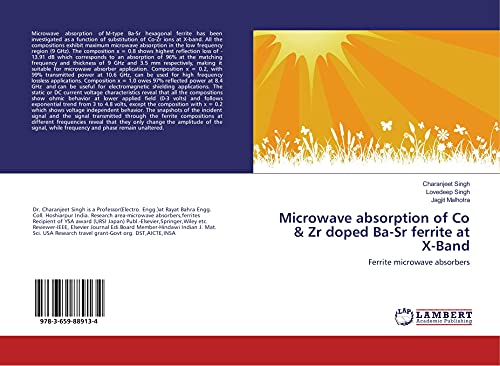
Microwave absorption of Co & Zr doped Ba-Sr ferrite at X-Band: Ferrite microwave absorbers
Permanent damage effects of nuclear radiation on the X-band performance of silicon Schottky-barrier microwave mixer diodes

Development of X-band EMI shielding Using Carbon Based Material: Expanded Graphite Integrated Polyaniline Dual Phase Dielectric X-band Microwave Absorber

Microwave Ferrites: Synthesis, Characterization, AC-DC & Microwave Absorption Studies of Ba-Sr Hexaferrites at X-Band

MC420S Microwave Mobile Detection Module 10.525GHZ X-Band Microwave Sensor Automatic Induction Gate Intelligent Control
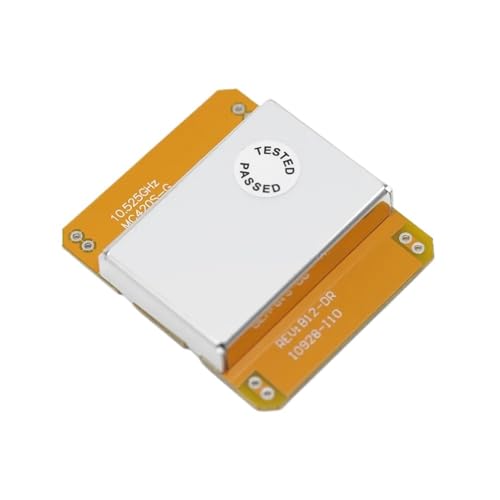
- High-Precision Sensing for Critical Applications:Our linear sensors offer ultra-accurate displacement detection with industry-leading precision, delivering consistent data for industrial automation, robotics, and motion control systems. Equipped with advanced sensing technology, they provide real-time feedback to optimize processes, reduce errors, and enhance operational efficiency—critical for maintaining productivity in high-stakes environments.
- Industrial-Grade Durability You Can Depend On:Engineered to thrive in harsh conditions, these sensors feature heavy-duty housing that shield against dust, water, vibration, and temperature fluctuations. Whether installed in manufacturing facilities, automotive workshops, or outdoor equipment, they maintain reliable performance through continuous heavy usage, minimizing replacement needs and downtime.
- Hassle-Free Integration & Universal Compatibility: Designed for easy setup,ensuring seamless compatibility with most PLCs, controllers, and data acquisition systems. With plug-and-play functionality and user-friendly calibration guides, installation is straightforward for professionals and hobbyists alike, saving valuable time on setup.
- Versatile Performance Across Industries:Perfect for linear position monitoring, stroke measurement, and motion tracking, these sensors adapt to diverse applications: 3D printers, CNC machinery, devices, agricultural equipment, and more.
- Quality Guaranteed with Comprehensive Support:Every sensor undergoes rigorous testing ensuring long-term stability and performance.
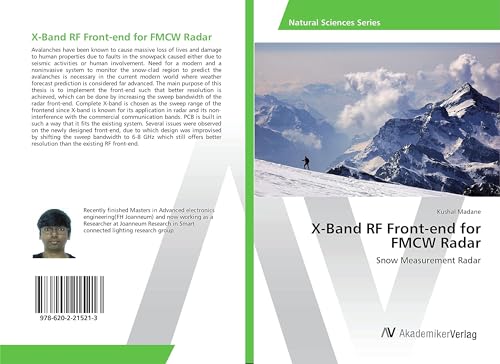
X-Band RF Front-end for FMCW Radar: Snow Measurement Radar
Power Amplifiers for the S-, C-, X- and Ku-bands: An EDA Perspective (Signals and Communication Technology)

Product prices and availability are accurate as of the date/time indicated and are subject to change. Any price and availability information displayed on Amazon.com at the time of purchase will apply to the purchase of this product.
Buying Guide
FAQs
What should I consider when choosing an X‑Band microwave product?
First, identify the primary application—whether you need sensing, power amplification, or EMI shielding. Next, compare frequency stability, power handling, and environmental durability, as these affect performance in harsh or precision‑critical settings. Finally, evaluate integration ease, such as compatible interfaces and calibration tools, to ensure a smooth deployment.
How do the MC420S sensor and the GaN power amplifier differ in functionality?
The MC420S is a high‑precision displacement sensor designed for linear position monitoring at 10.525 GHz, offering rugged housing and plug‑and‑play integration. In contrast, the GaN‑based power amplifier boosts signal strength for X‑Band transmission, focusing on high output power and efficiency rather than measurement accuracy. Choose the sensor for metrology tasks and the amplifier for signal generation or radar applications.
Which product provides the best value for industrial‑grade durability?
The MC420S sensor emphasizes industrial‑grade durability with dust, water, vibration, and temperature resistance, reducing downtime and replacement costs. While other items like the microwave rotary joints also offer robust construction, the MC420S combines durability with high‑precision performance, delivering strong overall value for demanding environments.
Are there any products that simplify system integration for existing PLCs or data‑acquisition units?
Yes, the MC420S sensor is specifically designed for hassle‑free integration, featuring universal compatibility and plug‑and‑play setup that works with most PLCs and controllers. Its user‑friendly calibration guides further shorten installation time, making it an attractive choice for engineers looking to upgrade legacy systems without extensive redesign.
What are the key performance metrics to compare between the X‑Band ferrite absorber and the carbon‑based EMI shielding material?
For ferrite absorbers, focus on magnetic loss tangent, bandwidth coverage, and temperature stability, which determine how effectively they dampen unwanted signals. Carbon‑based EMI shielding is evaluated by its conductivity, shielding effectiveness (in dB), and weight, influencing both performance and ease of installation. Selecting the right material depends on whether absorption or reflection‑based shielding is more critical for your application.
Which product is best suited for radar applications that require high‑power output?
The GaN‑based microwave power amplifier is optimized for high‑power X‑Band operation, delivering superior gain and efficiency essential for radar transmitters. Its semiconductor technology provides better thermal handling and linearity compared to traditional amplifiers, making it the preferred option for demanding radar systems.
How do the microwave rotary joints compare to the X‑Band RF front‑end module for FMCW radar in terms of flexibility?
Microwave rotary joints offer mechanical rotation capability, allowing continuous signal transmission through moving parts, which is valuable for rotating radar antennas. The X‑Band RF front‑end module, designed for FMCW snow‑measurement radar, focuses on compact electronic performance without moving components. Choose rotary joints when mechanical motion is required, and the RF front‑end when a fixed, high‑precision electronic solution is needed.